
We’re thrilled to finally see my kitchenette design come to life! After more than a year of planning and building, the renovation stretched from April 2024 to August 2025—and the wait was well worth it.
The kitchenette is one of three new rooms built over the footprint of our old carport. At about 2.9 by 2.8 metres, it may be compact, but it plays a big role. It links the new and old parts of the house, working as a kitchenette, a connecting corridor, and a social hub. Just beyond the French doors, our main outdoor space makes it the perfect spot for gathering, cooking, and conversation.
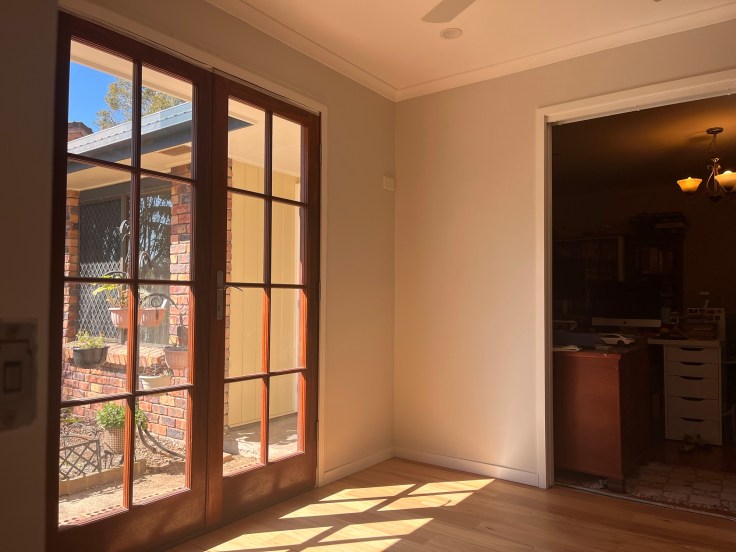
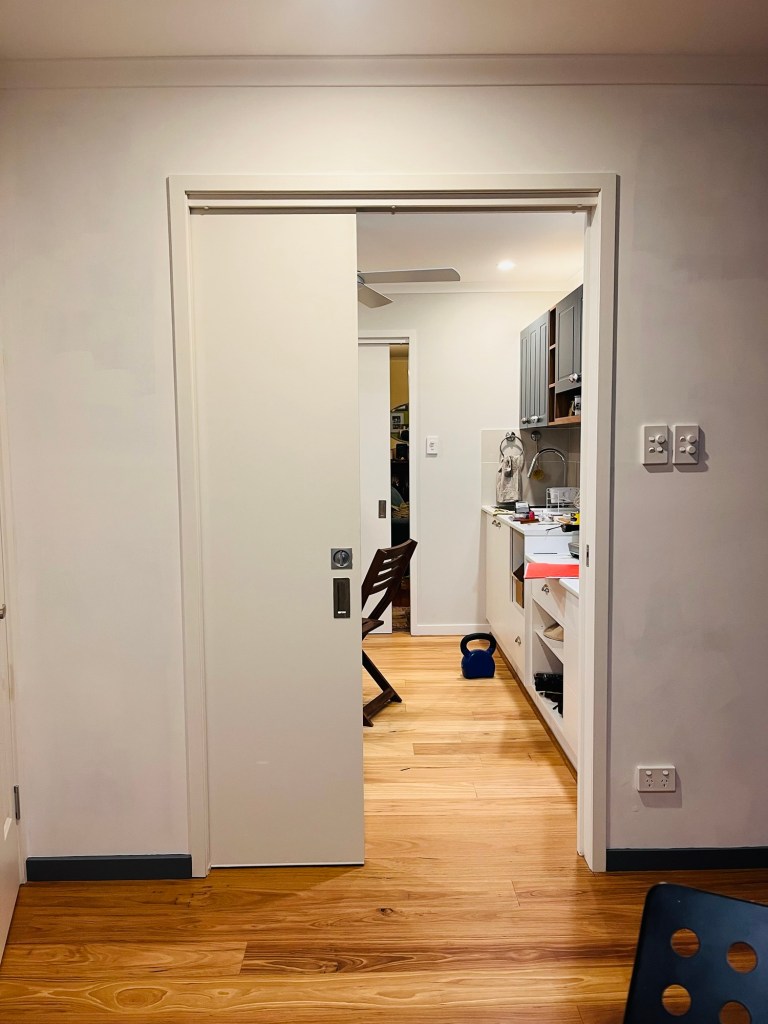
The other two rooms in this new extension each have their own story and purpose—something I’ll be sharing soon on the blog.
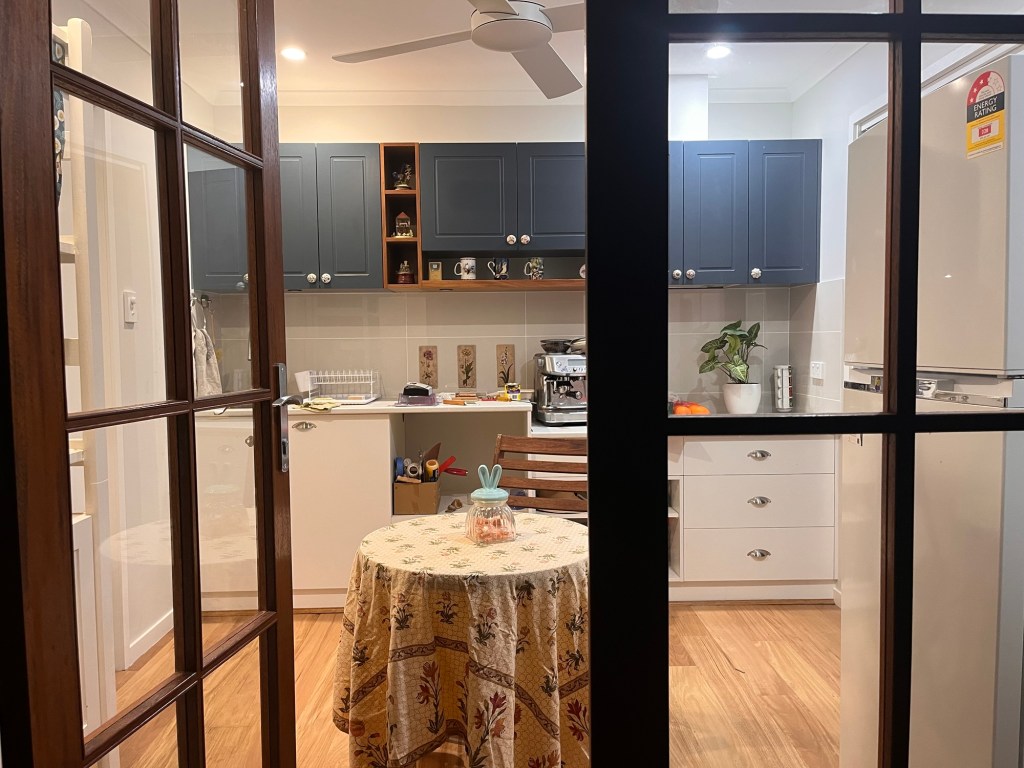
From the beginning, I wanted this kitchen to be as flexible as possible—just like the other two rooms. After many revisions, the final design became a linear kitchen layout without full-height cupboards or a pantry. Visually, this creates a clean “wall-through” passage, with the door on one side and the kitchen facilities on the other.
Of course, a pantry-free kitchen meant I still needed a way to store groceries. A fridge was also non-negotiable—something we had dreamed of for years but couldn’t fit into our main kitchen. With our growing family, this new tiny kitchen was the perfect place to finally make room for one.
Budget Constraints → Creative Storage Solutions
In an ideal world, I would have filled this hard-won new space with beautiful brand-new furniture. But by the time construction wrapped up, our budget was exhausted. That meant being not only flexible, but open-minded about the options that surfaced.
At the time, there was also urgency—my mum’s upcoming stay. Even so, I didn’t want to grab the first piece I could find. I browsed Marketplace for corner shelves, vintage sideboards, and hutches, but nothing was quite the right fit.
Then came what I like to call God’s provision: just as we clicked in the last piece of floating floorboard, the council kerbside collection began in our suburb.
Upcycled Furniture That Made the Space
On my school run, I spotted a solid open shelving unit sitting on the kerb. I took measurements, and it matched the kitchenette space like a dream! Yes, the paint was chipped in a few spots, but only in places that didn’t matter. Functionally and visually, it was exactly what we needed—practical storage without the bulk of fixed cupboards.
That same day, I also came across a small outdoor table. At first, I didn’t think much of it—after all, a table had never been on my “must-have” list for this small kitchen. But my son loved it, begged me to bring it home, and I’m glad he did. It turned out to be the perfect little workspace with a garden view, while still leaving space to open the fridge. I even found an old cloth from a friend to dress it up, giving it warmth and charm.
Hunting for a Used Fridge
Instead of buying a brand-new fridge, I explored factory seconds, a secondhand appliance store, and eventually Facebook Marketplace. I was amazed at how many secondhand fridges popped up nearby!
In the end, I chose a 2018 Westinghouse 60cm fridge-freezer with a 3.5-star energy rating. It cost less than a third of a new unit and still had years of use left. Shopping secondhand not only saves money but also supports sustainable living by extending the lifespan of working appliances.
Choosing a Cooktop
From the design stage, I knew this kitchenette would be 30% kitchen and 70% workspace/social hub. A fixed stove would waste valuable bench space. Instead, I went with a portable induction cooktop, which is compact, energy-efficient, and safe.
The rangehood was designed to blend in even without a traditional stove underneath. A double power outlet was installed for flexibility. After some online research, comparing reviews and prices, I found a reliable Westinghouse induction cooktop at the lowest price nearby — saving around $70.
Small Things That Add Up to Big Savings
I often browse op shops and secondhand stores, not because I have to, but because I love the unique household items they offer. Many pre-plastic era pieces are surprisingly durable, environmentally friendly, and add character that mass-produced goods lack.
In this open tiny kitchen, I’ve found treasures like a secondhand glass and brass sugar jar, vintage table knives and spoons, a ceramic plant pot, and a timeless fruit bowl. These budget-friendly finds not only save money but also bring personality and sustainability into the space.
Wrapping Up: Tiny Kitchen, Big Character
Designing this tiny kitchen on a budget taught me that style and function don’t come from spending big — they come from thoughtful choices. By combining secondhand appliances, portable cooktops, and upcycled kitchenware, I’ve created a small kitchen that works beautifully for both daily living and entertaining.
If you’re planning a budget-friendly kitchen renovation, don’t underestimate the power of secondhand shopping, online research, and creative design. Every item has a story, and together they can turn even the smallest space into a sustainable, stylish kitchen that feels uniquely yours.
 Shirley's Aussie Notebook 雪莉的澳洲手札
發表留言